
What follows is a post from late July, but I was delayed until today posting. I hope you might enjoy it still!
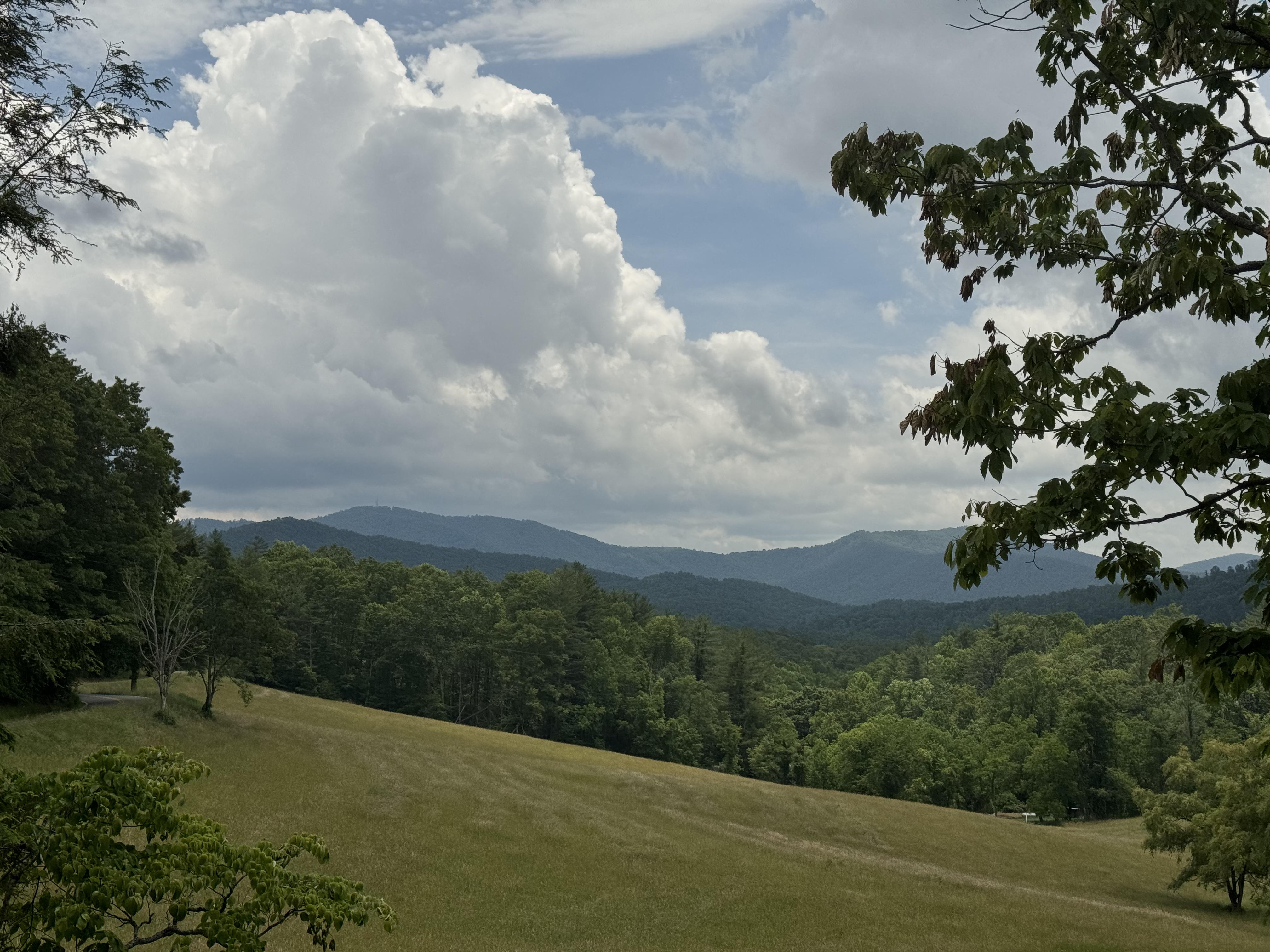
Since the end of May, I lived, worked, and immersed myself in art and the life of the community of artists gathered at Penland School of Craft, one of America’s oldest crafts schools, nestled in the Blue Ridge Mountains of western North Carolina. The surrounding mountains offer spectacular views, wildlife is in abundance, and the cool mountain breeze and frequent afternoon thunderstorms make for comfortably cool summer weather. And it is noticeably quiet; I love this time away from the drone of highways and other urban noise, and in so many ways, the western mountains of North Carolina are idyllic. However it was only last September, that Penland and nearby Spruce Pine became two of the hardest hit areas of destruction from wind and mudslides as hurricane Helene swept through the region. Now, ten months later, one can still see huge swaths of downed trees, and every day utility trucks can still be seen clearing fallen trees next to roadways. Cable or fiber internet continues to be unavailable, but fortunately the school has Starlink internet access in many of the main buildings, albeit with limited bandwidth.
I am nearing the end of my eight-week sojourn. In exchange for working four weeks in the kitchen — mostly washing dishes and cleaning kitchen and dining areas — I was able to participate in two, 2-week long workshops, with all expenses covered. Of course, I am grateful to have had such a wonderful opportunity, but it has been a lengthy period to be away from family.
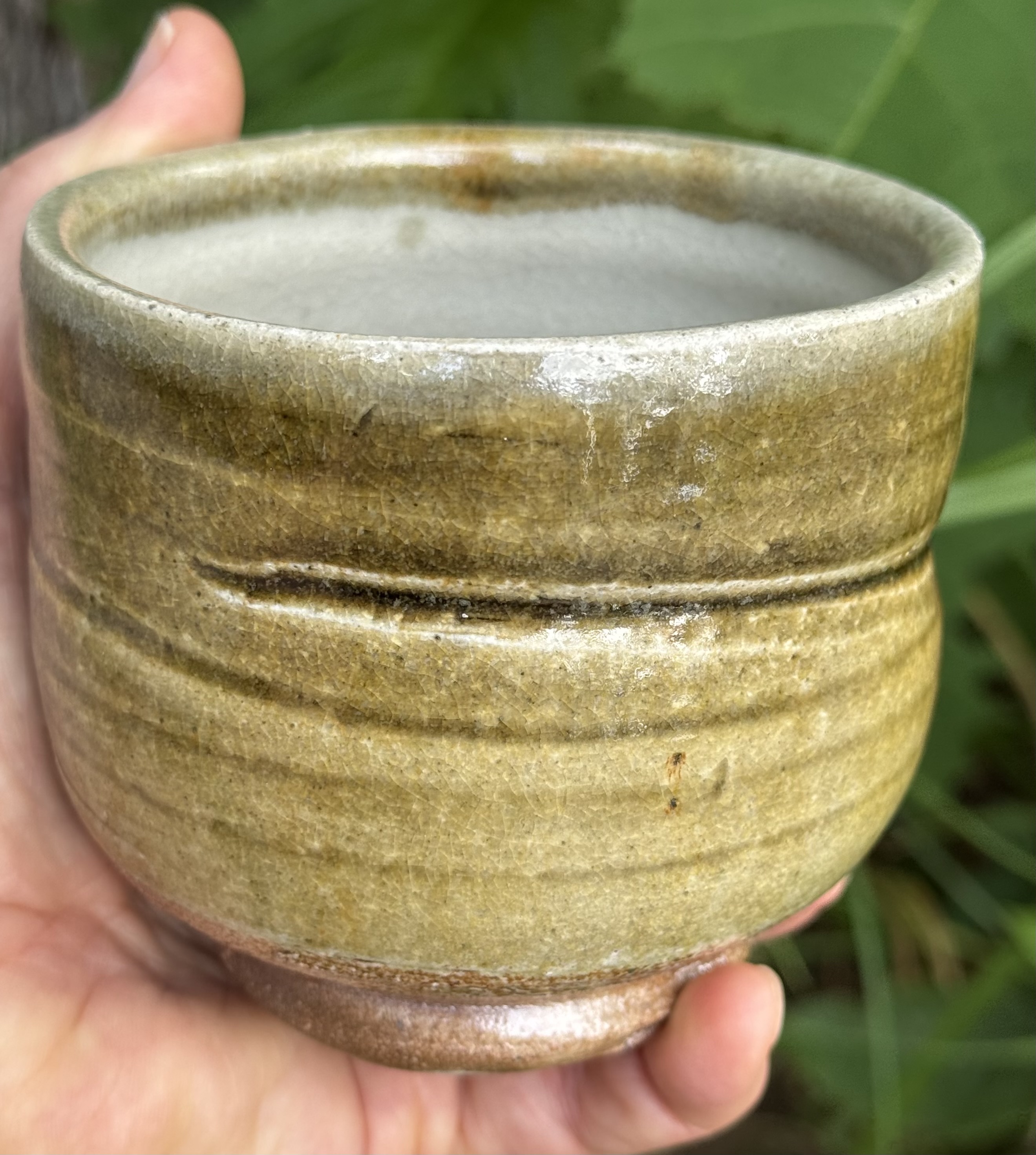
The stoneware teacup, shown in the photo, I made in a June workshop taught by Chis Staley. Chris is a Distinguished Professor Emeritus of Art at Penn State College of Arts and Architecture. Chris is a well-known artist and academic, and he has received many honors and awards. However, since I am a relative newcomer to ceramics, and have not studied art formally, I was unfamiliar with his work — that is, until I researched his background and accomplishments before registering for the workshop. When I read the description in the Penland course catalog for Chris’s summer workshop, “Making Pots Personal,” I was certain it would be a wonderful growth opportunity for me. Chris designed the workshop to encourage students to find their unique voice, and from the first evening on, students learned to push past imagined boundaries and take risks, as he skillfully nurtured an environment of mutual trust and support. For educators of all levels and disciplines, I highly recommend his new book, “Teaching Art & Life” (2024, FlipLearning), where he distills the best of his pedagogical practices from his 35 years at Penn State.
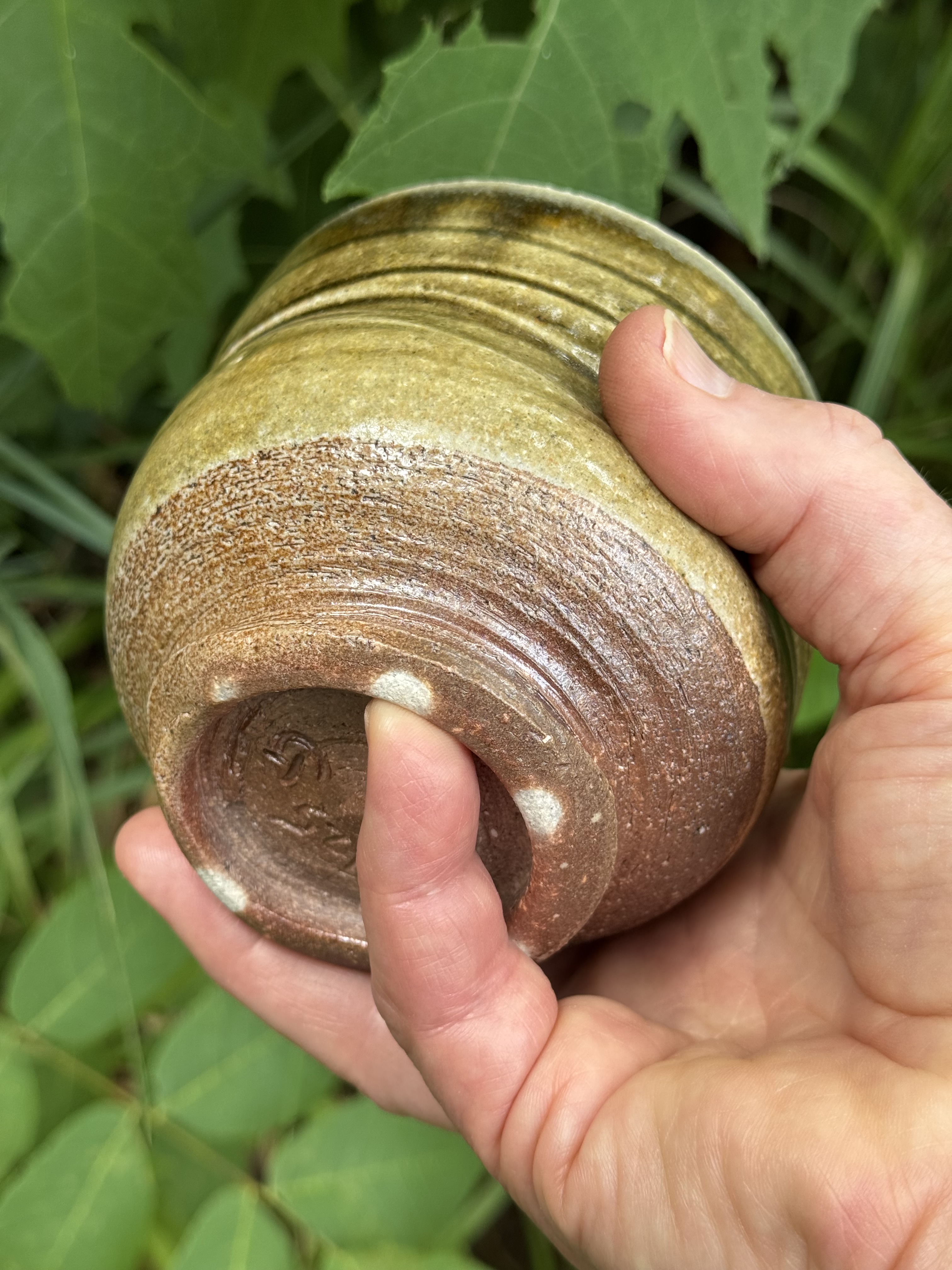
It was natural that initially most of us did not take many risks or push boundaries (or listen to “that still, small voice?”), and, not surprisingly, our work on the first day looked relatively safe and routine. But, with Chris’s encouragement and nudging, and through class exercises and demonstrations of examples, my thinking-mind (“inner critic”) slowly ebbed, and began to disengage and go off-line. This made room for the work to take form from both body-mind and heart-mind, rather than thinking-mind. The transition was remarkable and its effect on my work felt profound. For example, in the teacup shown above, the free-form horizontal grooves and the wavy, almost fluid foot, mirrors the reckless abandon of the grooves. I love the resulting indention in the pot for the thumb to rest comfortably, while the ring finger and pinky fingers hold the cup on the outside and inside of the foot, respectively.
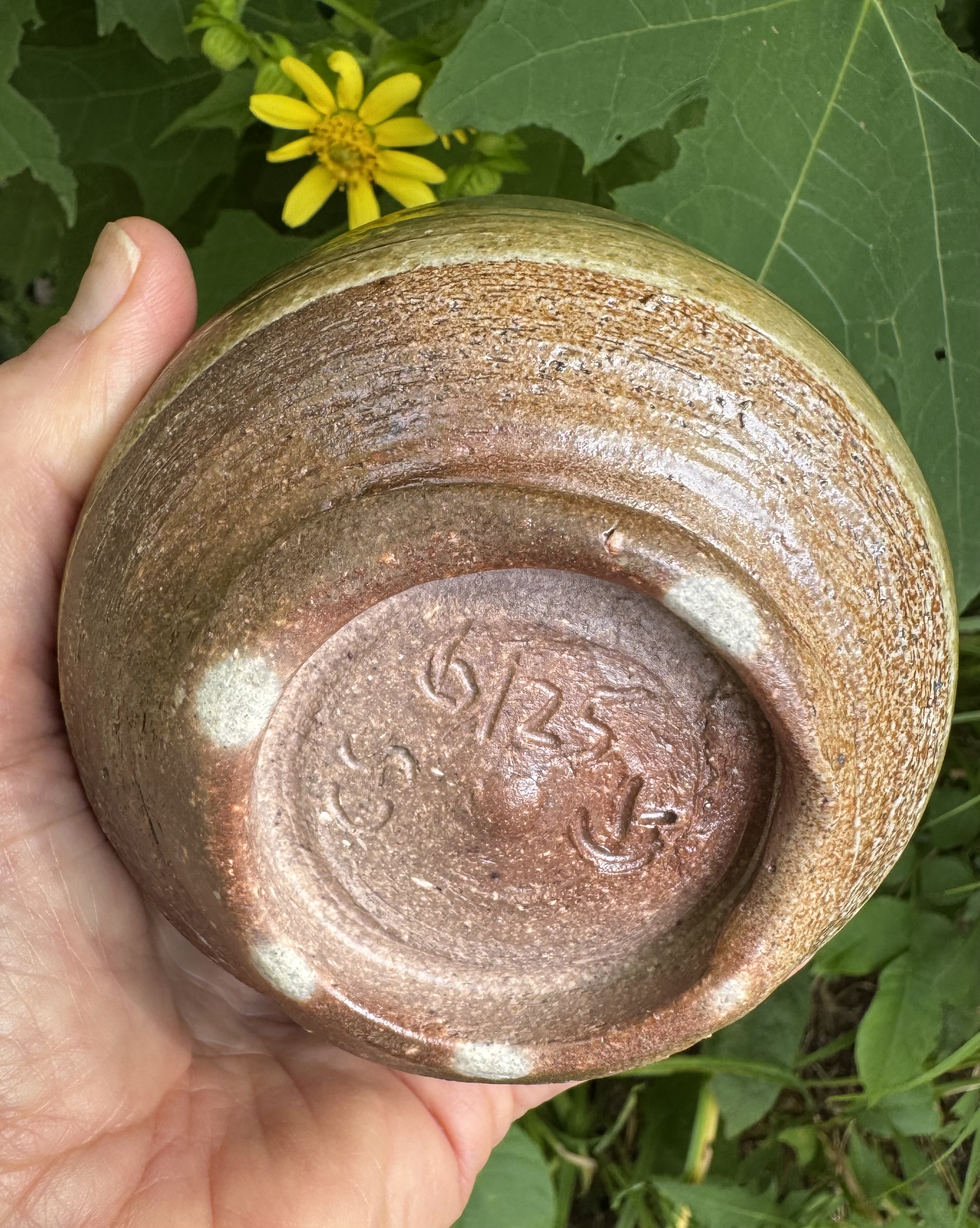
The parts of the teacup left unglazed show the effects of the salt kiln, where gaseous sodium chloride reacts with silica and alumina compounds in the clay to form a glassy surface. The glass forming reaction would cause the surface of the foot to adhere to the bottom of the kiln shelf if it were not for five round wads of refractory material I attached to the base before firing. After the pots in the kiln cool, these wads simply fall away, leaving the circular areas unreached by the salt vapors. If you closely examine the base of the teacup, you can see the direction of the flame, with its reactive gases.
In such a seemingly simple task of throwing a clay pot on the wheel, I witnessed something much greater. Letting go (Eckhart’s “Gelassenheit”) made room for an encounter of my body-mind with the clay body. And, as with all true encounters, something new was birthed, not of one or the other, but of a new “symbol” (sym + bole = together-thrown), a throwing together, as it were — the birthing of a new playful form.

